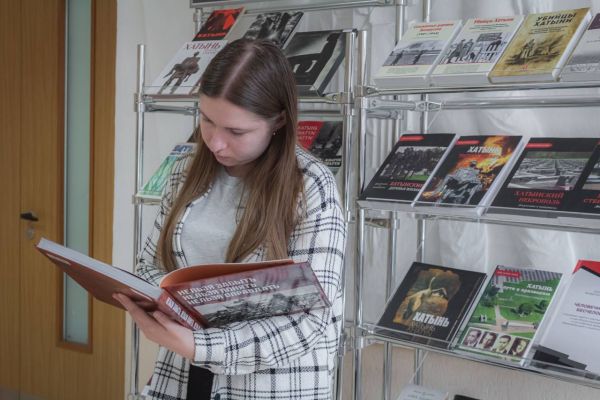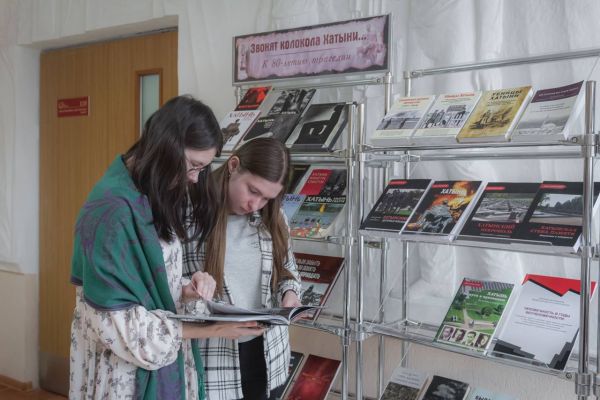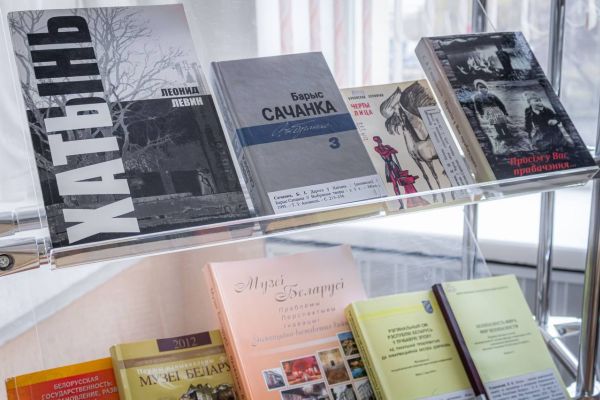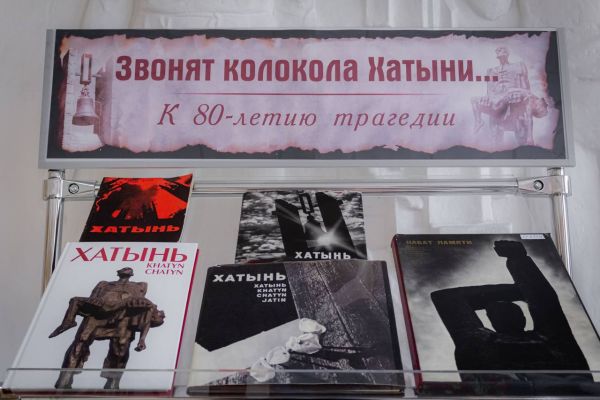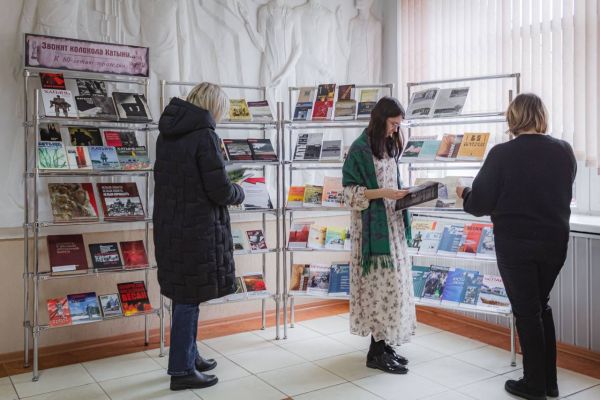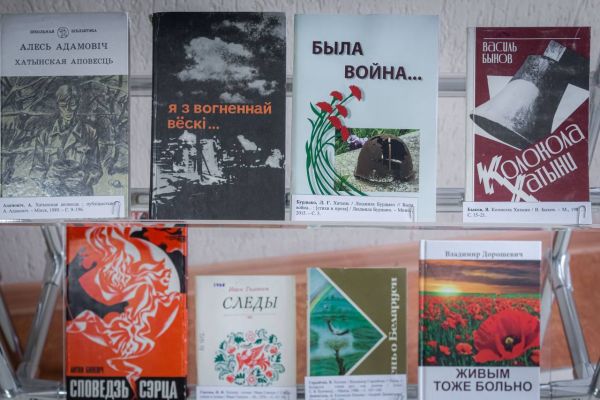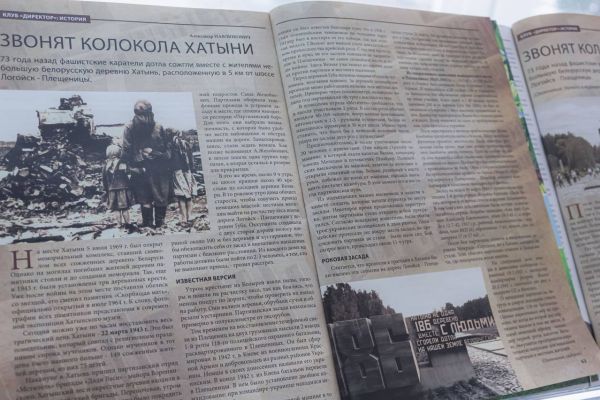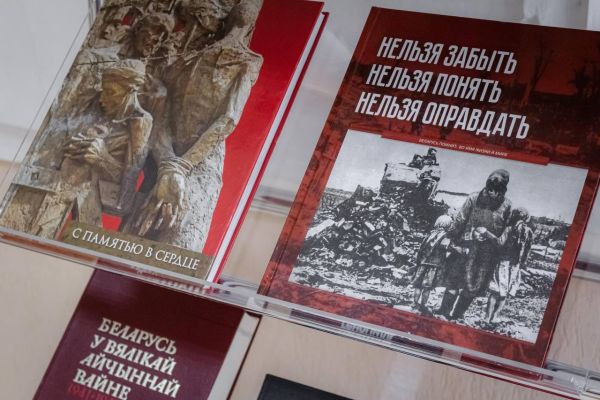
The exhibition presents book publications, including materials of archival documents, as well as scientific and popular scientific articles devoted to the history of the Belarusian village of Khatyn and its tragedy. In addition, the materials of the exhibition highlight the history of other fiery sisters of Khatyn – burned villages of Belarus, restored in peacetime and not restored. The library's website has published a list of literature on the topic: https://csl.bas-net.by/news/one-news.asp?id=93608.
On March 22, 1943, the punishers surrounded the Belarusian village of Khatyn, located near the Lahojsk – Plieščanicy road. The entire population of the village was herded into a large collective farm shed, after which the building was doused with gasoline and set on fire. People who tried to get out of the burning shed were shot at. 149 people died in the fire, including 75 children. Misha Novitsky, Lena Mironovich, Misha Yaskevich were two years old, Christina Rudak, Anya Fedorovich, Raya Zhelobkovich, Vasya Mironovich were three years old. Stepa Iotko, Anya Yaskevich, Anton Novitsky, Kostya Karaban were four years old, Tolik Yaskevich was only seven weeks old. The village of Khatyn was completely destroyed. The village of Khatyn became a symbol of the fury of the Nazi occupiers towards civilians, sharing the fate of hundreds of Belarusian villages who died in the flames of the Great Patriotic War. The murders of innocent people took place all over the country, from shootings during raids to the total destruction of settlements. The Nazis believed that mass executions, the destruction of villages together with people were supposed to sow terror among the population of the occupied territories. During the three years of occupation, 2 million 230 thousand people died in Belarus, more than 200 cities and urban settlements were destroyed, more than 9,000 villages were burned.
For the first time, the idea of a monumental perpetuation of the memory of the deceased residents of Khatyn was documented in December 1965. On January 17, 1966, the Presidium of the Central Committee of the CPB decided to establish memorial signs on the site of the burned village and open a branch of the Belarusian State Museum of the History of the Great Patriotic War here. Over the years of its existence, the Khatyn State Memorial Complex has been visited by over 36 million people from more than 100 countries. The complex is included in the list of historical and cultural values of the Republic of Belarus.