Altai glaciers reveal secrets. Belarusian and foreign scientists have compiled a chronicle of the impact of North-Eastern Eurasia on the nature
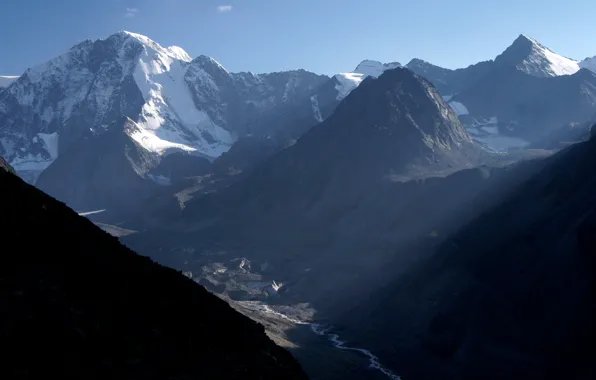
An international scientific team with the participation of scientists from the NAS of Belarus has reconstructed a two-hundred-year history of anthropogenic impact of North-Eastern Eurasia on the nature based on ice cores from Altai glaciers.
The joint scientific project has been carried out over a number of years by scientists from Belarus, the Russian Federation, Switzerland, and Austria. The scientific team included 11 people. These were scientists from the Institute of Nature Management of the NAS of Belarus (Belarus), the Institute of Water and Environmental Problems (Barnaul, the Russian Federation); the Paul Scherrer Institute (Villigen, Switzerland); the Oeschger Center for Climate Change Research, University of Bern (Bern, Switzerland); the Department of Chemistry, Biochemistry and Pharmacy, University of Bern (Bern, Switzerland); the Department of Meteorology and Geophysics, University of Vienna (Vienna, Austria).
The study included the determination of heavy metal content (Ag, Bi, Cd, Cu, Pb, Sb, Zn) in ice cores extracted from Altai Tsambagarav and Belukha glaciers, covering the period 1700–2018, at the Paul Scherrer Institute (Switzerland). The results are compared with reconstructed levels of anthropogenic emissions of heavy metals in the territory of the former USSR region for 1975–2015, obtained by Belarusian scientists from the Institute of Nature Management of the NAS of Belarus.
The results of the joint research project were recently published in the high-impact scientific journal Science of the Total Environment*.
Glacier drilling to obtain ice cores** is today considered a "breakthrough" scientific field, where many scientific teams around the world are focusing their efforts. It obtains unique information about the paleogeographic conditions of the past, to reconstruct the chronicle of climate change and the dynamics of anthropogenic impacts.
The conducted research demonstrated the effectiveness of studying ice cores for paleoreconstructions of the levels of atmospheric and anthropogenic pollutant inputs into the environment.
Such studies are especially relevant for the Antarctic Ice Sheet, where it is possible to obtain ice cores up to 1 million years old. Successful implementation of such projects in Antarctica requires solving many technical, logistical and other problems that would obtain and deliver to the laboratory uncontaminated ice samples suitable for subsequent analysis, and performing chemical-analytical determinations of ultra-low concentrations of pollutants. Preparatory work in this direction is being carried out by the Institute of Nature Management of the NAS of Belarus.
*Anja Eichler, Petr Nalivaika, Sergey Kakareka, Tamara Kukharchyk, Theo M. Jenk, Thomas Singer, Tatjana Münster, Tatyana Papina, Stella Eyrikh, Andreas Plach, Margit Schwikowski. Recent heavy metal pollution from the territory of the former Soviet Union (FSU): Ice core records and emission estimates //Science of the Total Environment 983 (2025) 179632. https://doi.org/10.1016/j.scitotenv.2025.179632
** An ice core is a cylindrical sample of ice extracted from an ice sheet or glacier that contains information about the Earth's past climate. The core is a kind of vertical climate record because the underlying layers of ice are older and reflect climate conditions from more distant periods of time.