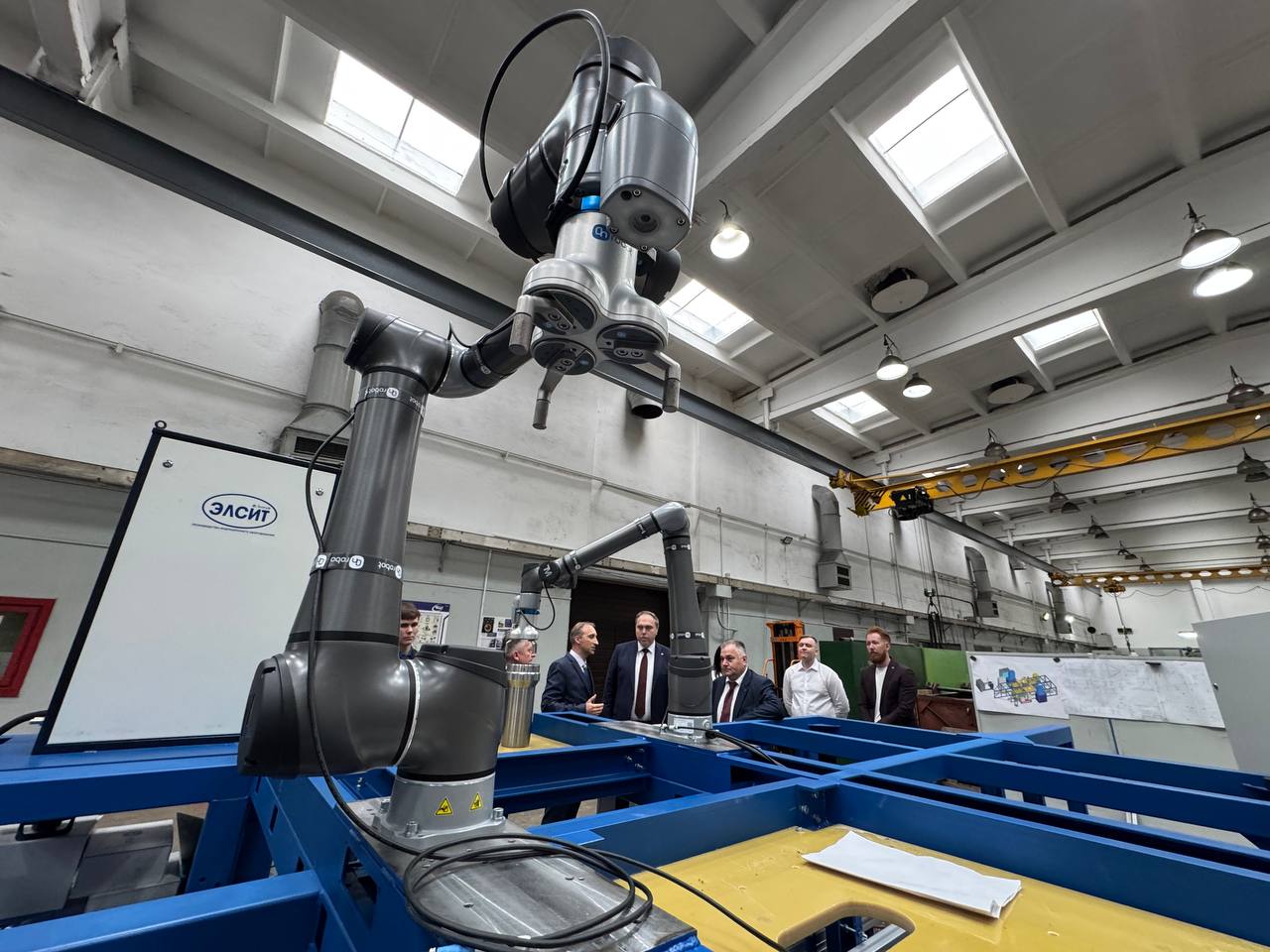
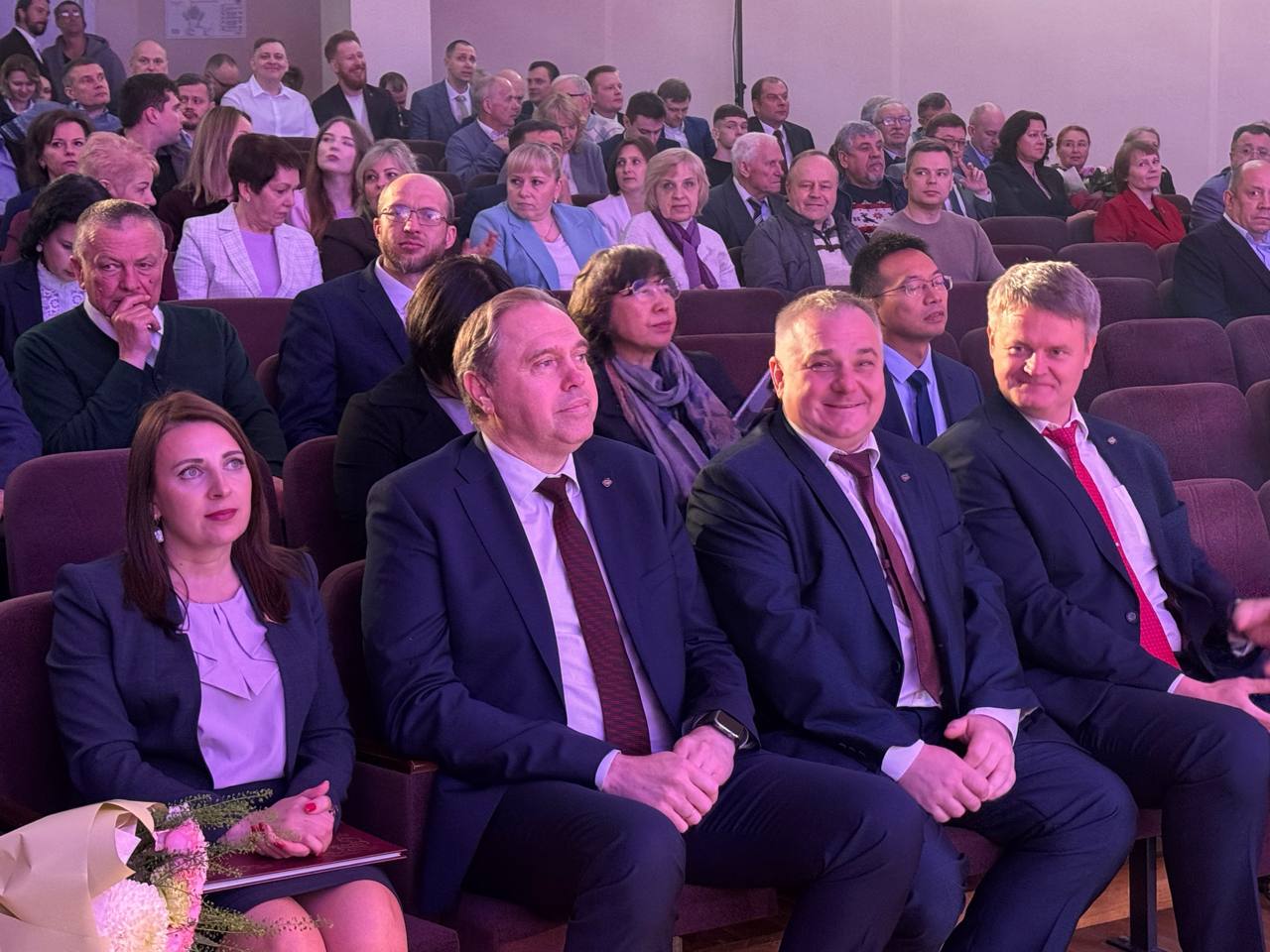
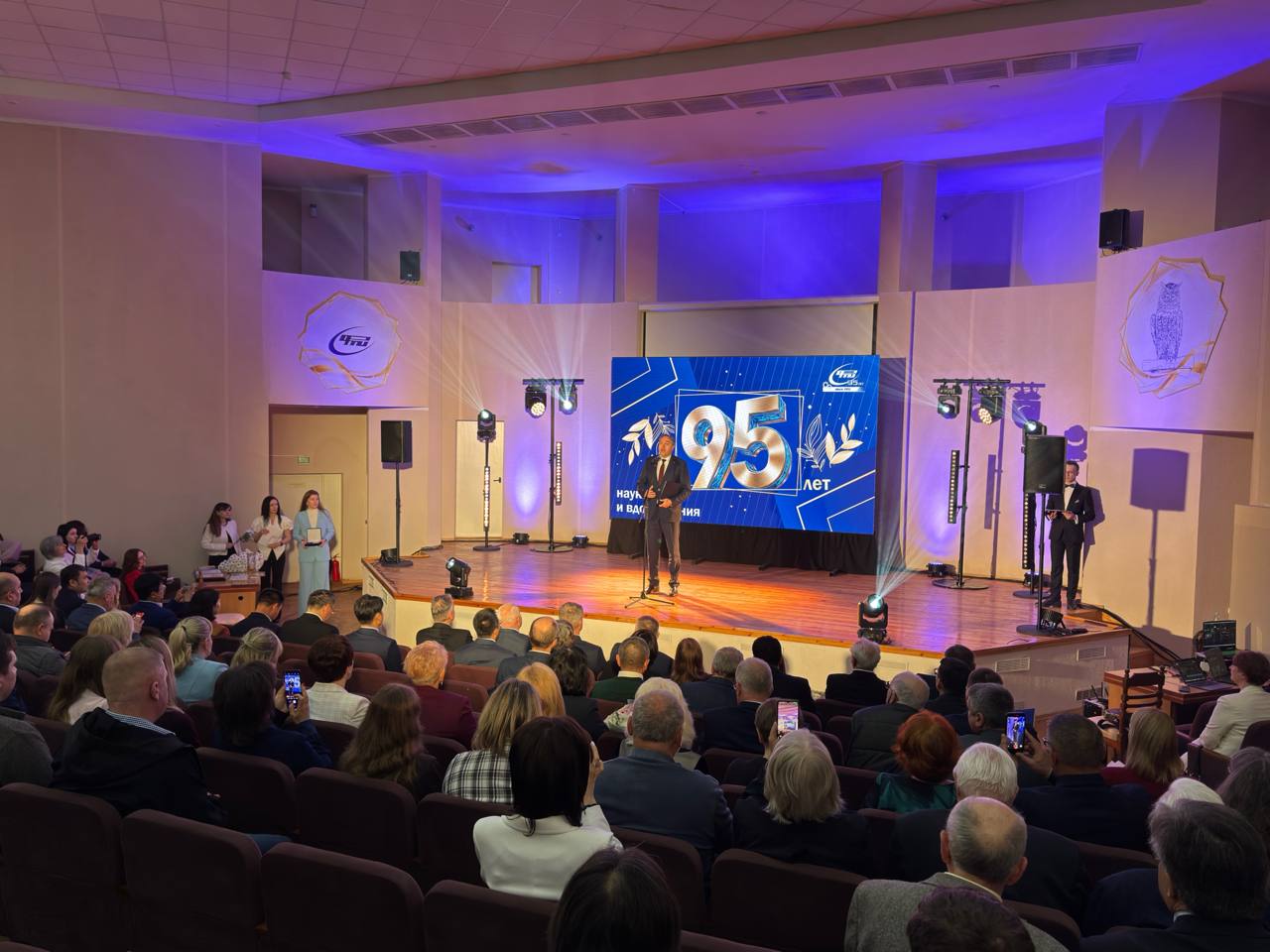
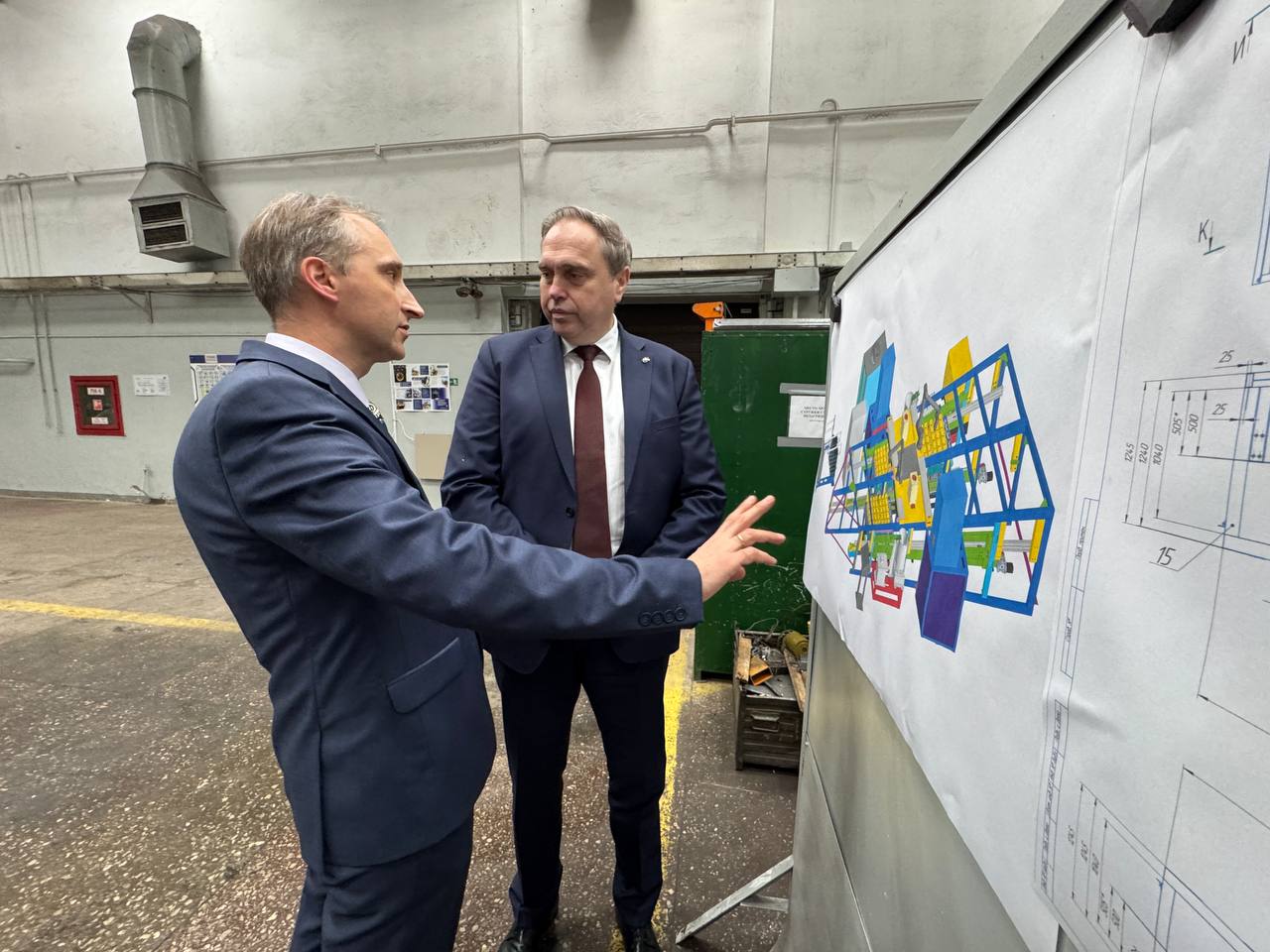
Today, the Physics and Technology Institute of the Academy of Sciences held celebrations marking the 95th anniversary of its founding. Colleagues, distinguished guests, and Vladimir Karanik, Chairman of the Presidium of the National Academy of Sciences of Belarus, gathered in the large hall to congratulate the institute on this important date. They were given a tour of the production facilities featuring modern automated systems and a look at the institute's future in the "Phystech: Today and Tomorrow" exhibition space, which was officially opened.
Addressing the staff and guests with a welcoming speech, Vladimir Karanik noted that the most important asset of the PTI has always been and remains its team – people for whom science is not just a profession, but a calling. "The exhibition 'Phystech: Yesterday, Today, Tomorrow' made a strong impression, showing its impressive development path. However, beyond its achievements, there's something even more important—Phystech itself, as a whole. Above all, it's the people—a team whose eyes sparkle with enthusiasm and who believes that nothing is impossible. This is a team ready to tackle the most complex and ambitious projects," he said.
The head of the Academy of Sciences also noted that from its founding in 1931 to the present day, the institute has been inseparably linked with the country's history, experiencing both bright and tragic times. The staff has always responded sensitively to the challenges of the times, successfully addressing the tasks facing the national economy. During difficult times, the institute stood up to defend the Motherland, participated in the country's reconstruction after the devastating war, and overcame the difficulties of perestroika, always moving forward, striving to achieve its goals.
"Watching your developments, especially in alloys, I've noticed that over the past 95 years, one 'alloy' has remained constant—the combination of youth and experience. This is an invaluable resource that enables the institute to move forward and confidently look to the future, opening up new horizons," said Vladimir Karanik.