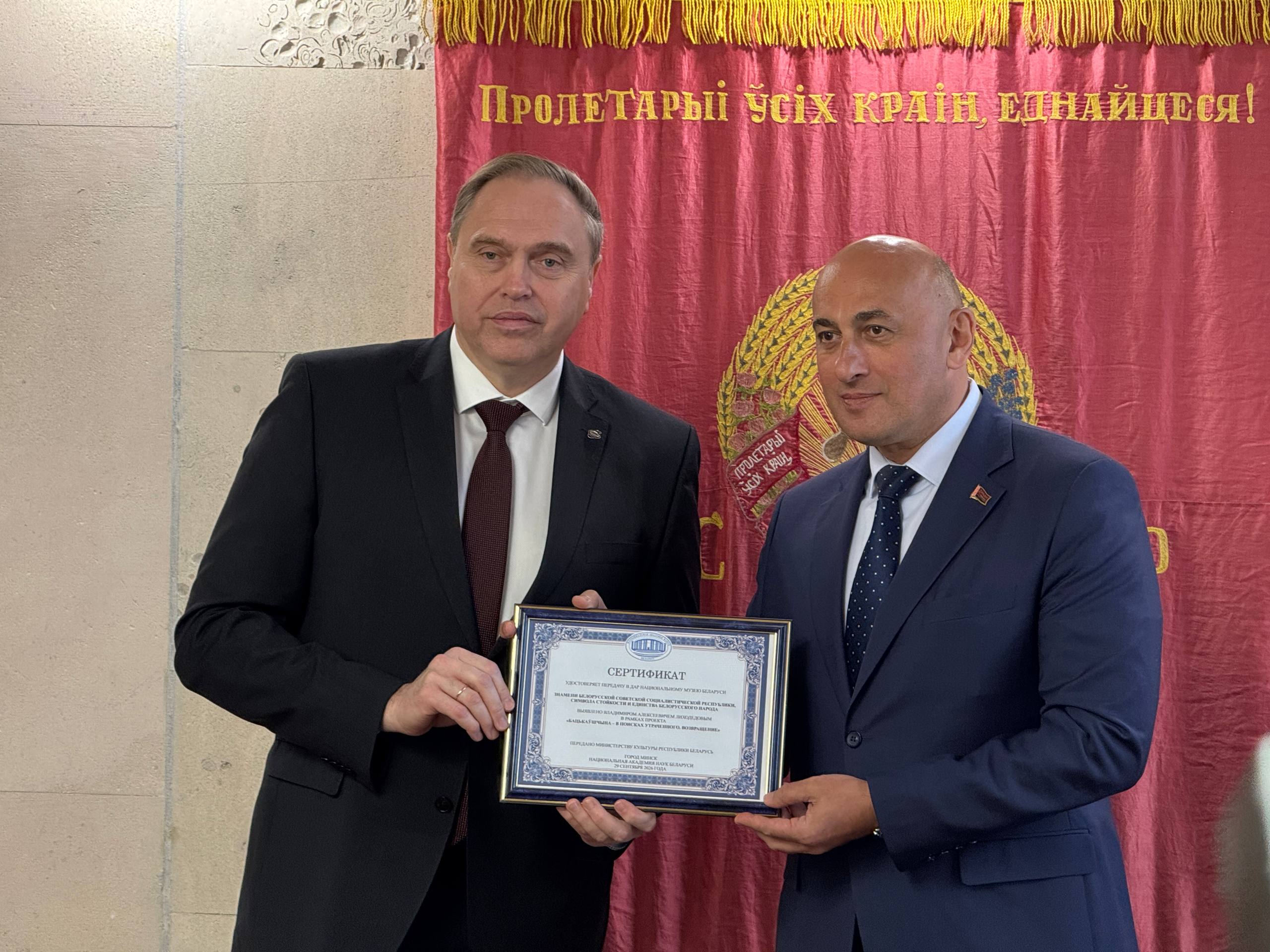
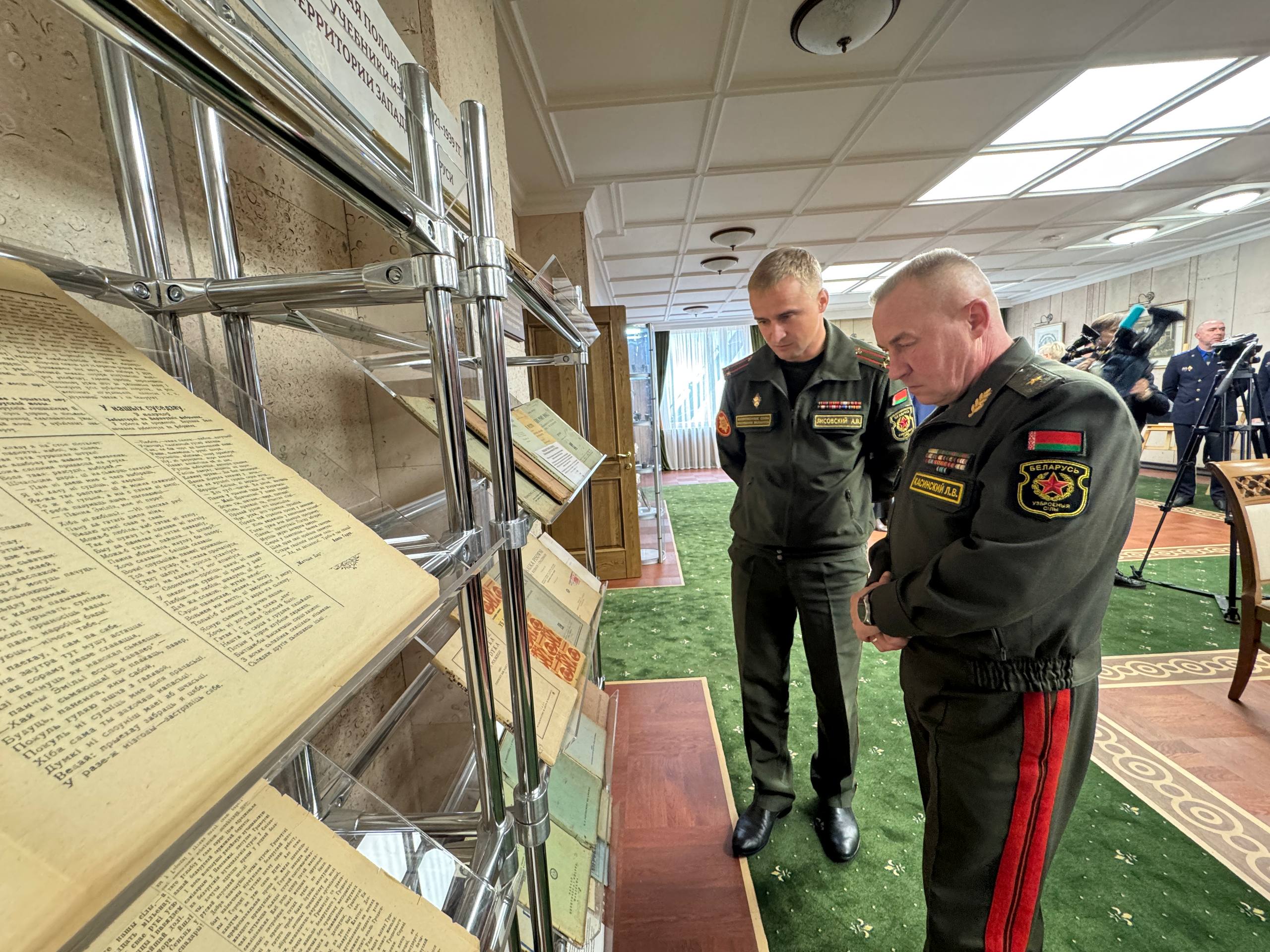
The exhibition is the result of an extensive effort to locate and return to Belarus national relics that had been considered irretrievably lost for decades. At the heart of the exhibition lies the personal collection of the renowned Belarusian researcher and historian Vladimir Likhodedov.
Tremendous work has been accomplished in close cooperation with the National Historical Museum: over years of searching, thousands of artifacts have been located and returned to the country.
These studies were conducted within the framework of the "Fatherland" project under tenure of the Deputy Chairman of the Standing Committee on Education, Culture and Science of the House of Representatives of the National Assembly, Academician-Secretary of the Department of Humanities and Arts of the National Academy of Sciences of Belarus Vyacheslav Danilovich
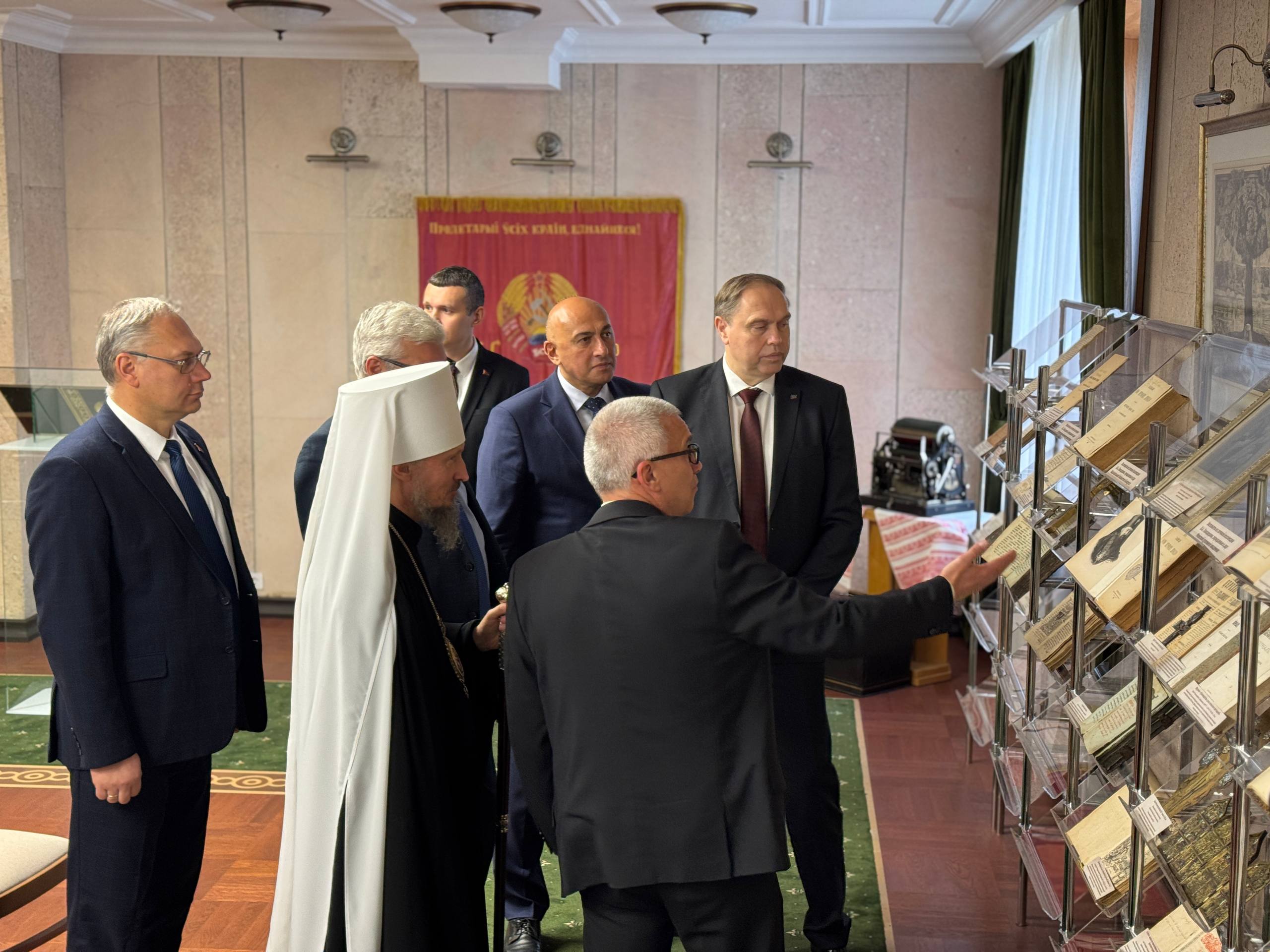
Among the items on display at the exhibition, a special place is held by the 1939 banner, which has come to embody the resilience and unity of the Belarusian people, as well as extremely rare publications destined for the collections of the Central Scientific Library of the Academy of Sciences.
Among them are books and periodicals published in Western Belarus nearly a hundred years ago.
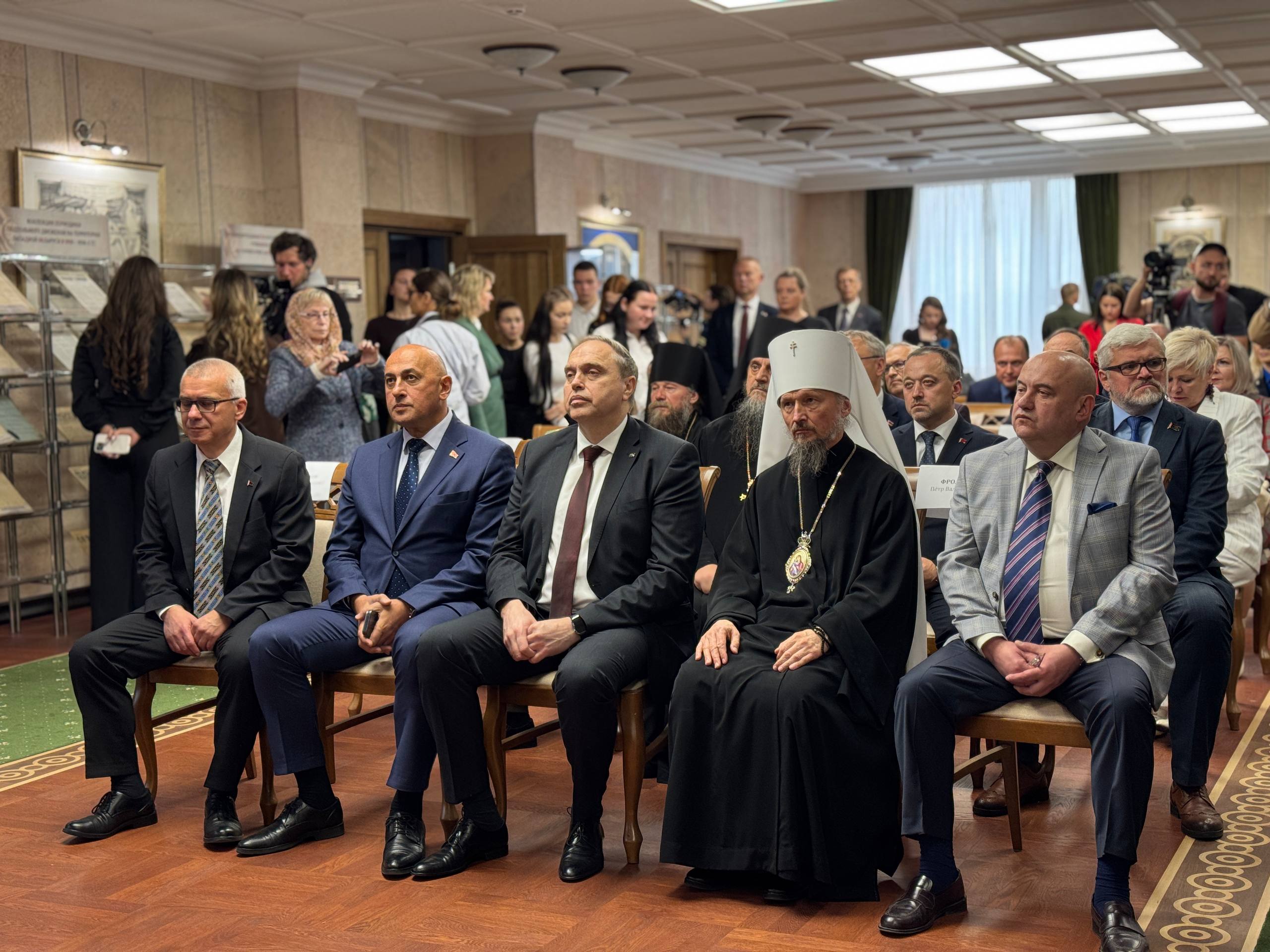
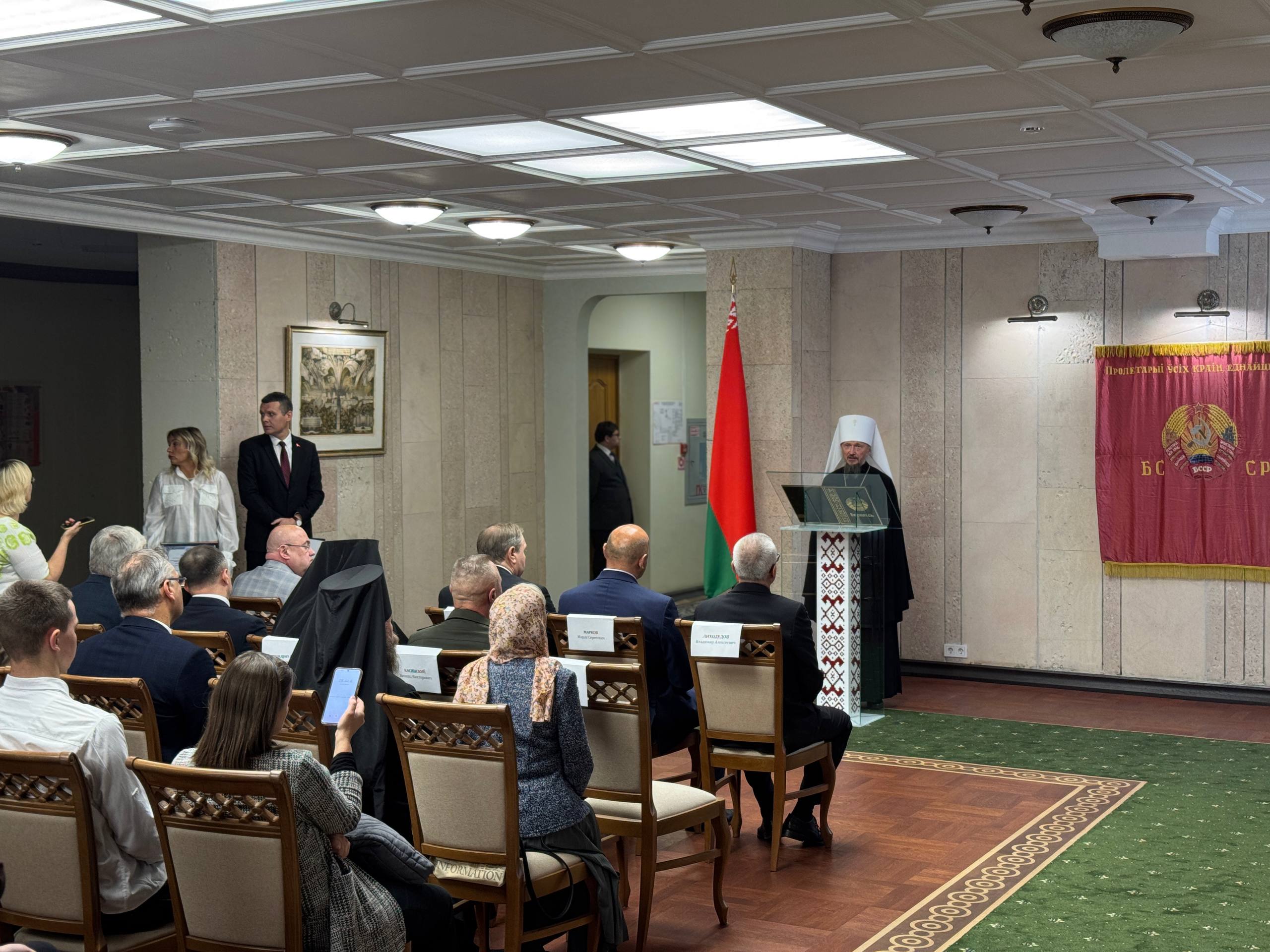
Vladimir Karanik, Chairman of the Presidium of the National Academy of Sciences of Belarus; Marat Markov, Minister of Culture; and Metropolitan Veniamin of Minsk and Zaslavl took part in the grand opening of the exhibition.
Vladimir Karanik emphasized that every item has undergone rigorous scientific inquiry. According to him, for the Academy of Sciences, preserving historical memory is not merely a tribute to ancestors, but the foundation upon which the country's future is built.
"Such projects are of immense importance for shaping the historical consciousness of society. It is vital for us to understand, and we cherish every detail regarding how our ancestors lived, what they aspired to, and what they fought for. The exhibits presented here have shed light on previously unknown chapters of our people's lives and their struggle for independence and unity. This gives us further reason to take pride in our ancestors and to pass on to future generations the importance of preserving historical memory and national identity," said Vladimir Karanik.
Representatives of the Investigative Committee, the Ministry of Defence, the Embassy of the Russian Federation in Belarus, the clergy, and students also took part in the opening ceremony.
In the near future, the exhibits will find a permanent home in leading museums, libraries, and spiritual centers across Belarus and become part of regional educational projects, allowing anyone interested to experience these unique and valuable cultural and historical artifacts firsthand.