Archaeologists of the Institute of History of the National Academy of Sciences of Belarus have found a fragment of the Neolithic Usvyat culture* vessel with an image of a fish about 5,000 years old.
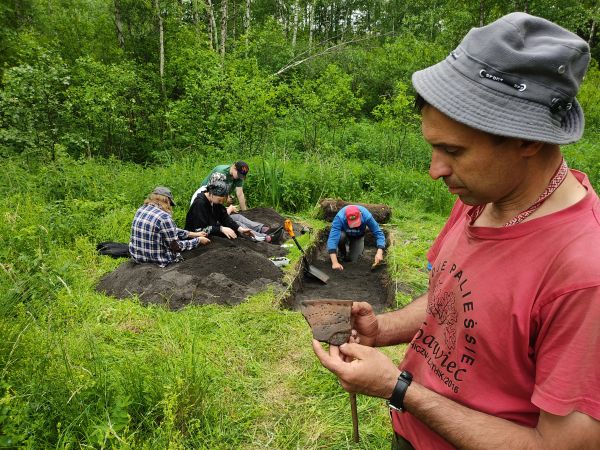
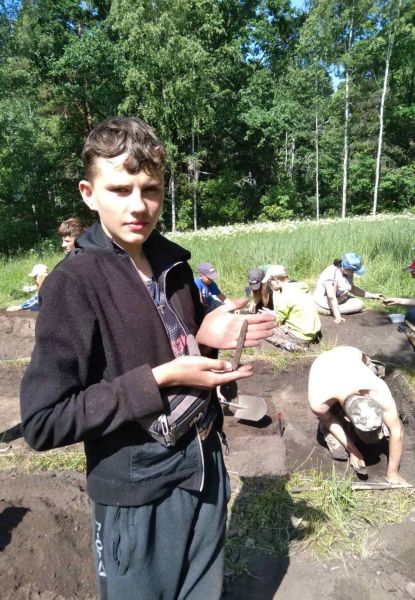
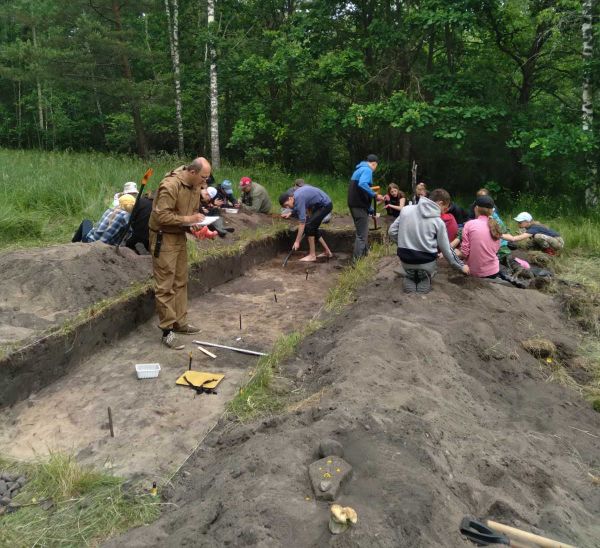
An expedition of the Institute of History of the National Academy of Sciences of Belarus, led by the Head of the department of archeology of the primitive society Maxim Chernyavsky, is currently excavating the multicultural settlement of the Mesolithic, Neolithic and Bronze Age Bereshcha 1 near the village of Vorobi (Lepel district, Vitebsk region). The work is carried out jointly with the students of the local history school camp «Dubovets» of the State Educational Institution «Slobodskaya Nursery-Garden-Secondary School of the Lepel District». According to historians, the first finds of the archaeological artifacts are already impressive, pleasing scientists and schoolchildren. Numerous ceramic, flint and stone objects of the material culture, as well as an interesting osteological collection, are revealed in the cultural layer. Among the finds, a stone two-platform grinding tile for the making flint axes, a bone dart tip, as well as a number of the unique fragments of the Middle Neolithic and Bronze Age pottery of the Usvyat culture and the Culture of the globular amphora** stand out. All finds from the current expedition will be sorted, certified and sent to the Institute of History of the National Academy of Sciences of Belarus for the further laboratory research.
*Usvyat culture is an archaeological culture of the tribes of the Middle Neolithic, which inhabited the Belarusian Poozerie, southern Pskov and northwestern Smolensk regions, as well as the southeastern Lithuania at the end of the 4th – the middle of the 3rd millennium BC.
**Globular amphora culture is an archaeological culture that existed in the period around 3200–2800 BC