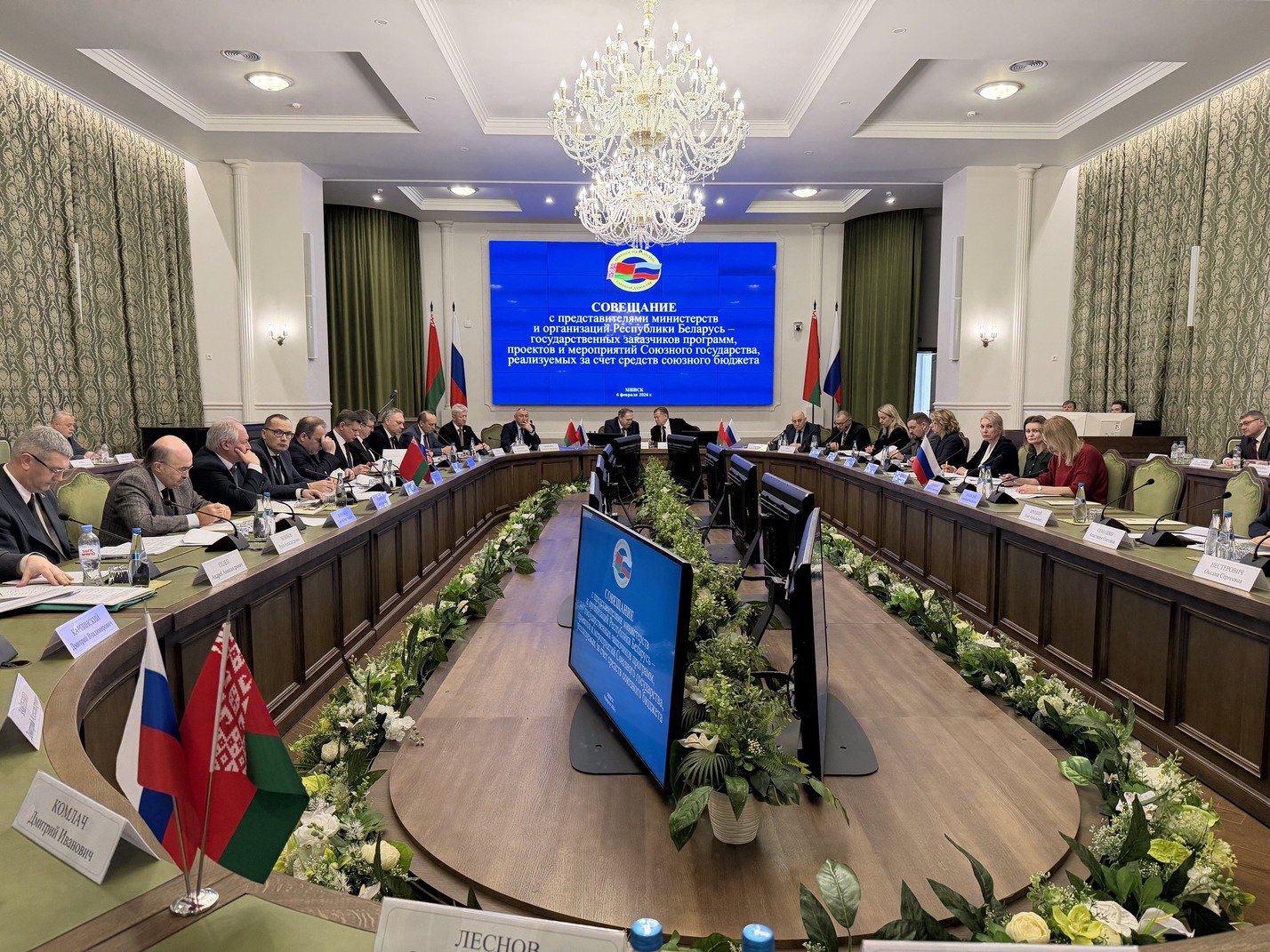
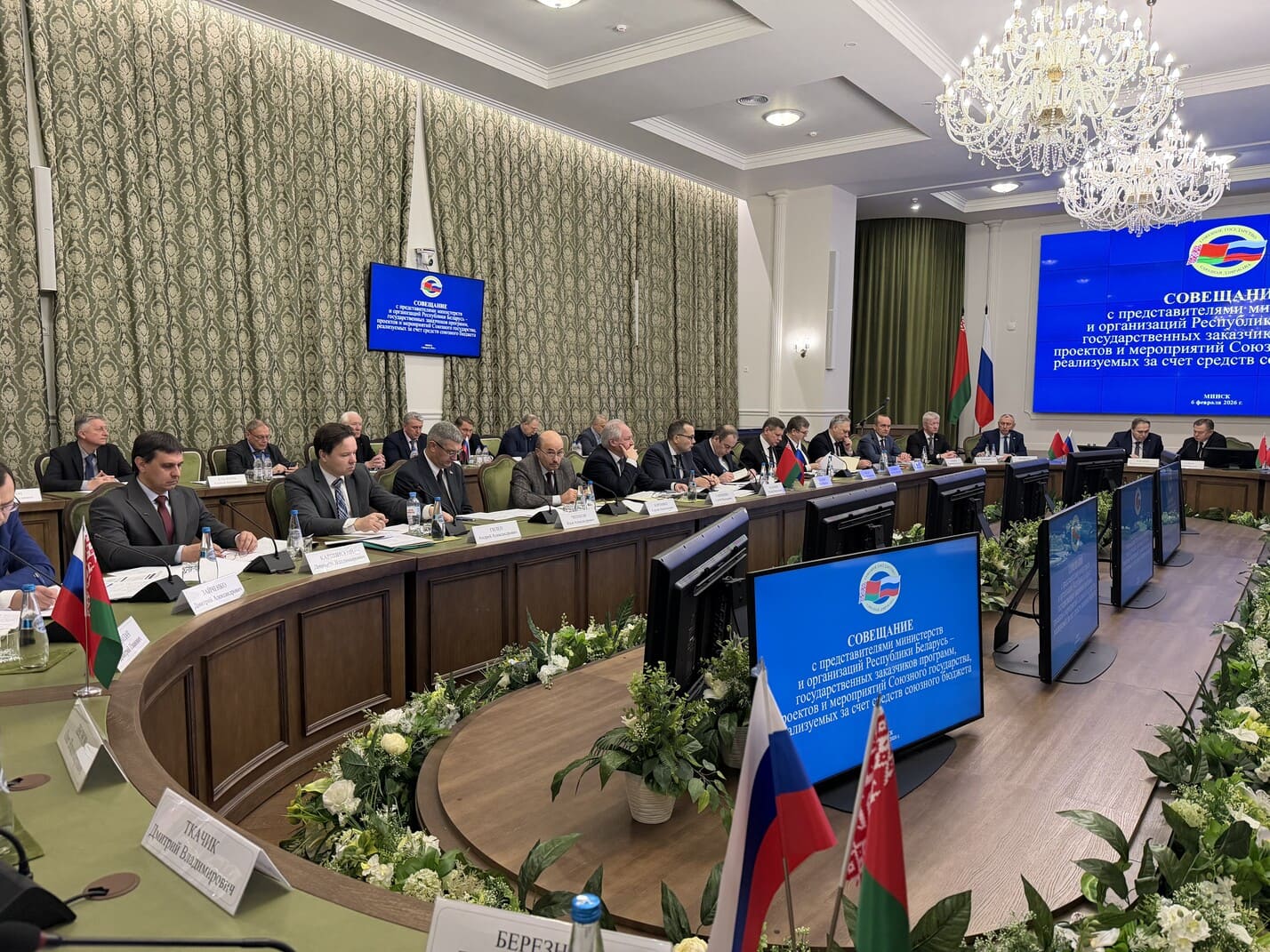
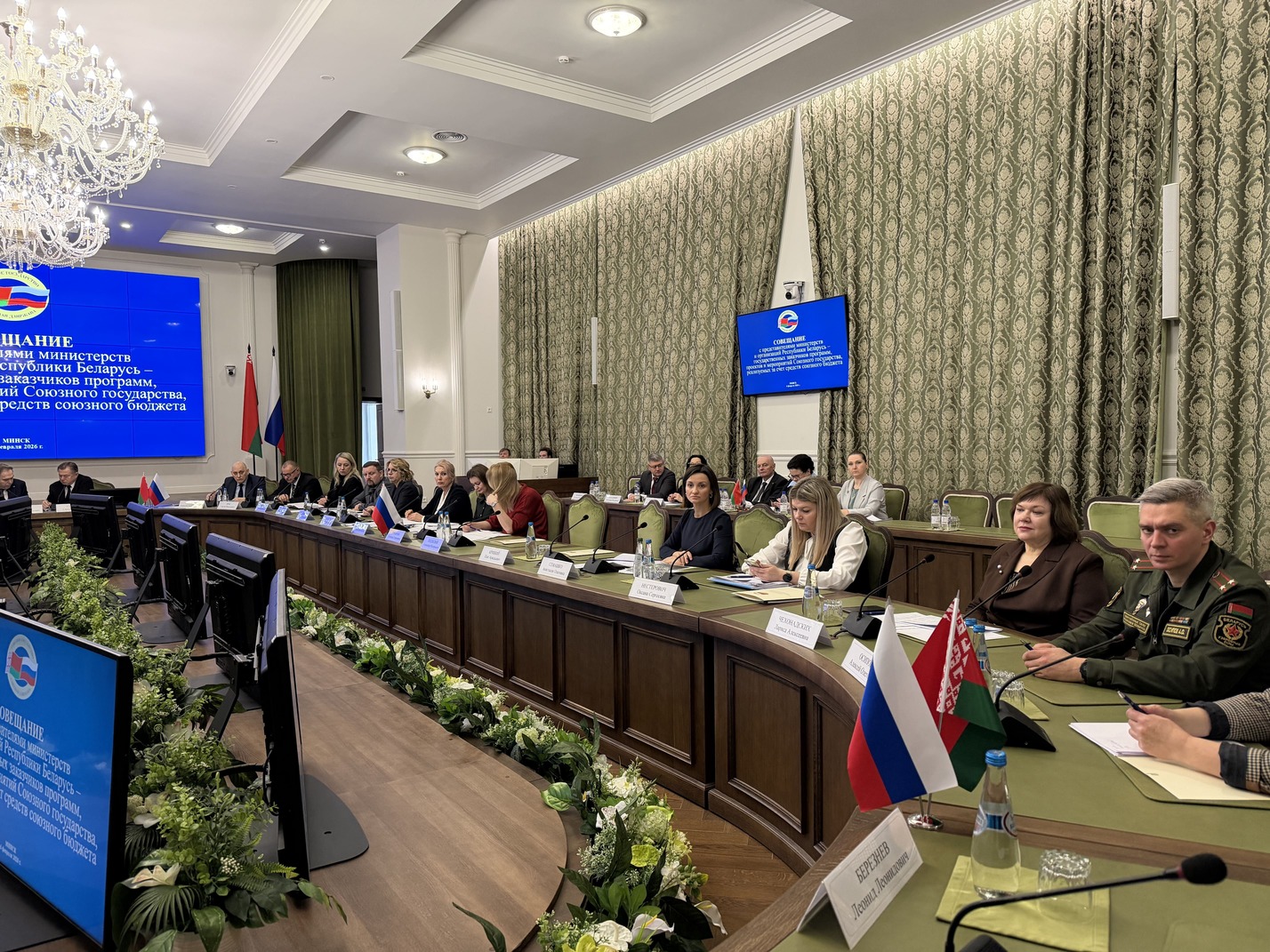
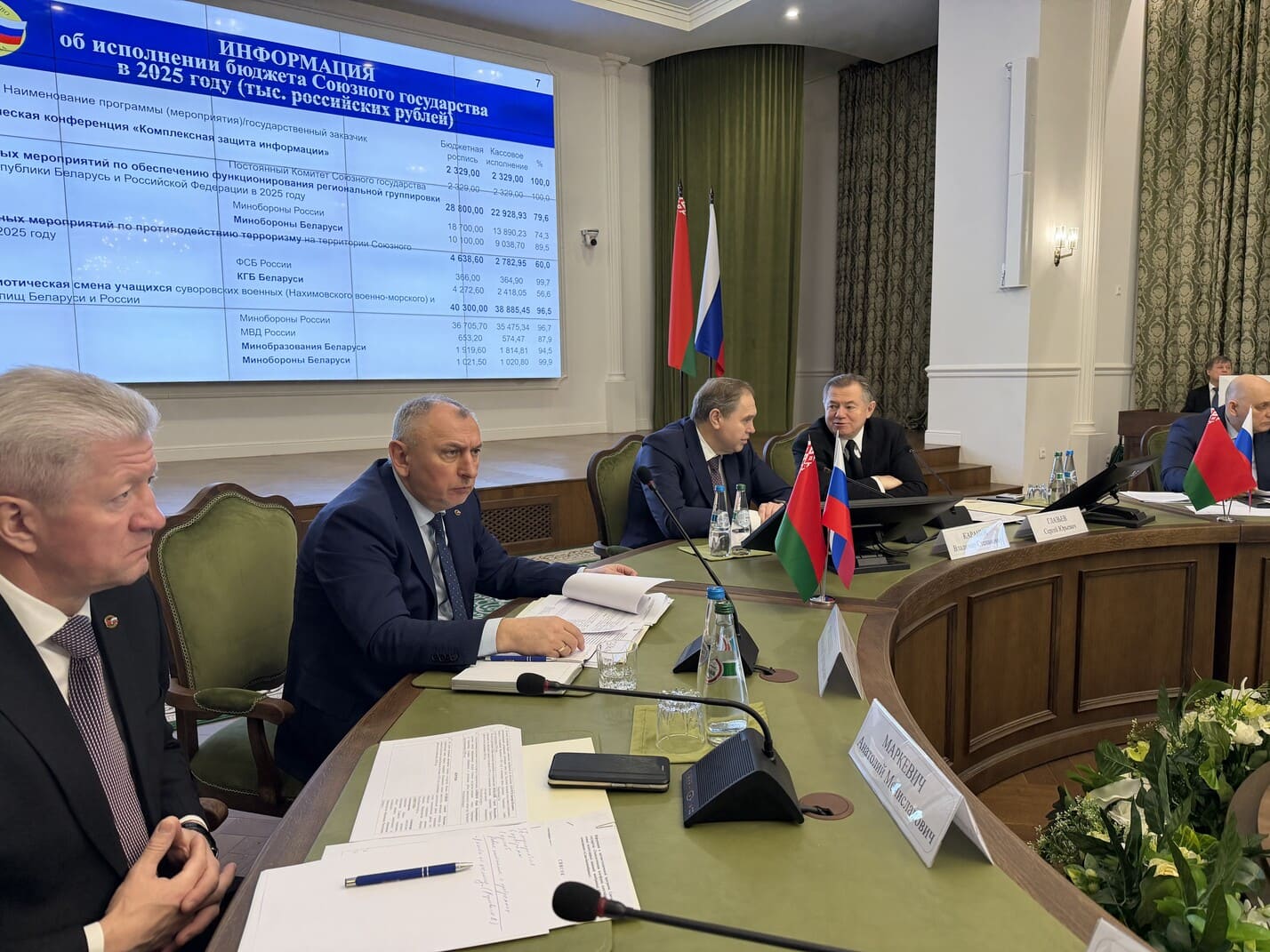
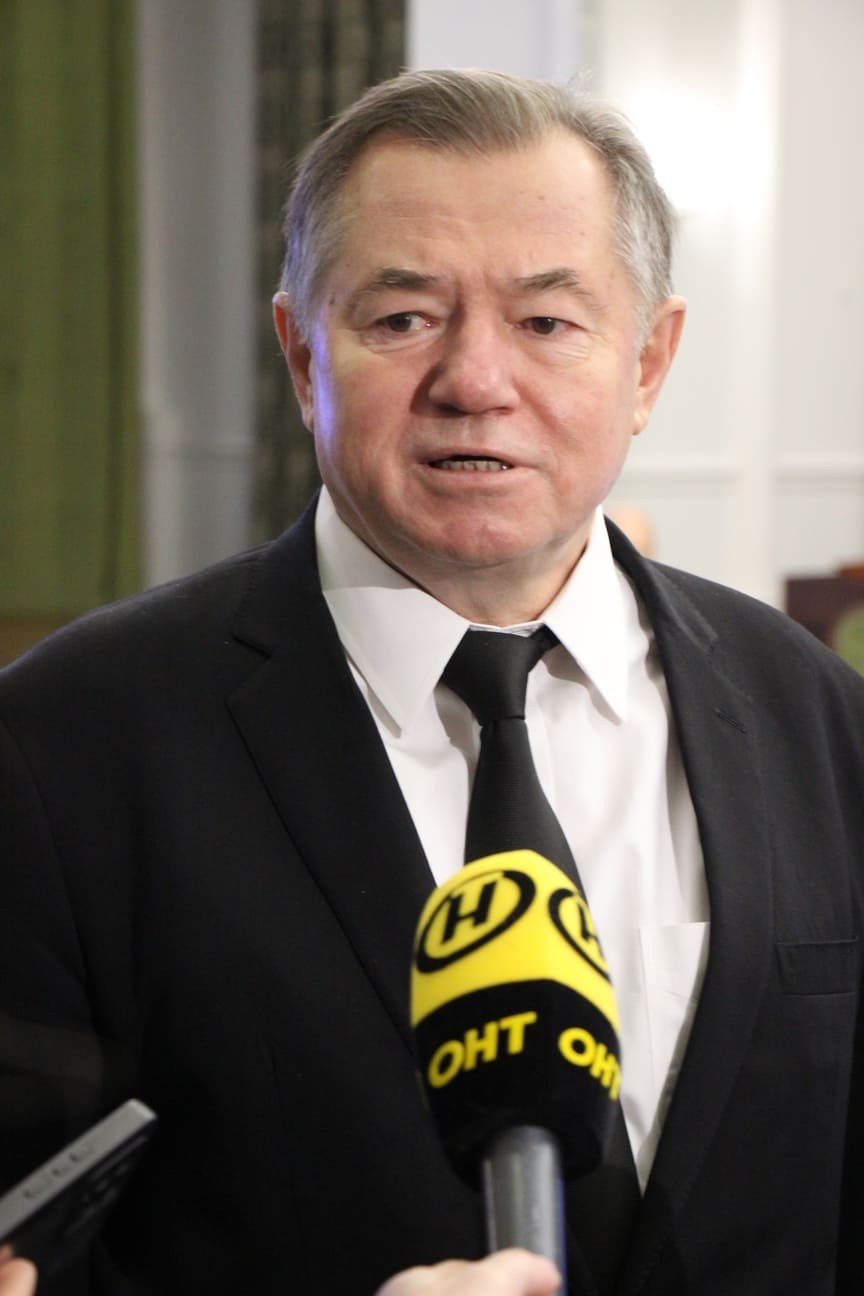
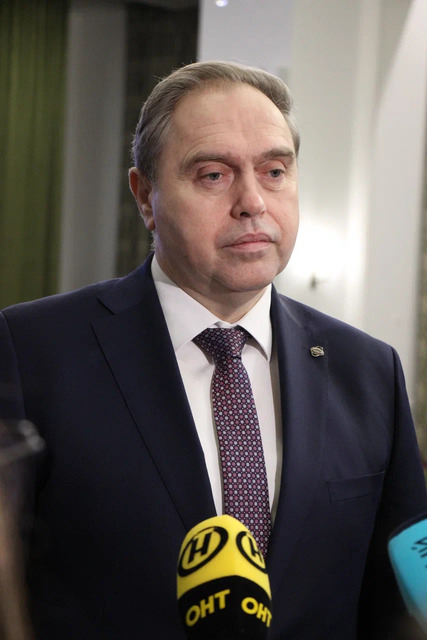
A meeting was held today at the National Academy of Sciences of Belarus with the participation of State Secretary of the Union State Sergei Glazyev and Chairman of the Presidium of the NAS of Belarus Vladimir Karanik to discuss twelve Union State programs in defense, security, military-technical cooperation, social policy, and economics. Six of these projects are promising, including four from the National Academy of Sciences of Belarus. These include "Technological Platform for the Identification of New Molecular Targets: Membrane Proteins and Their Complexes" (“Union-Biomembranes”), "Development of Robotic Technical Equipment for Industrial Gardening" (“Gardening-US”), "Innovative Technologies and Equipment for the Production of Specialized Baby Food" (“Baby Food”), and "Development of a Complex of Automated and Robotic Machines, Equipment, and Digital Technologies for Dairy Farming" (“Intellectual Farm-US”).
According to State Secretary of the Union State Sergei Glazyev, the Union State is currently implementing three programs in high-tech areas related to electronic components in the automotive industry, which are designed to enhance the competitiveness and technical capabilities of our vehicles. Another program is in photonics. It aims to improve the quality of devices, including those used in space exploration.
Sergei Glazyev highly praised the role of the National Academy of Sciences of Belarus in the implementation of the scientific programs of the Union State. "The National Academy of Sciences of Belarus is the leading scientific organization in the Union State in implementing scientific and technical programs. We always rely on the Academy's expert opinion," he emphasized. The Secretary of State also spoke about the creation of a supranational standardization committee in the Union State. He stated that a joint meeting of the Gosstandart of Belarus and Rosstandart, which are responsible for standardization, will soon be held. They are jointly developing standards, including for the CIS. "The advanced technical level of the two organizations enables us to expect the committee to become an intellectual, scientific, and technical leader in standardization," said Sergei Glazyev.
In turn, Vladimir Karanik, Chairman of the Presidium of the NAS of Belarus, reported that specific results and products have already been achieved in microelectronics and space exploration that will enhance the two countries' technological sovereignty. Specific research activities in biotechnology will begin in just a few days. "We approached this meeting with good results. Three union programs are currently in effect: photonics and microelectronics, space exploration, and biotechnology. They comprise more than twenty events and address the most pressing issues in scientific and technological research," said the Academy's director.
Representatives from 12 Belarusian ministries and agencies, as well as 11 organizations of the National Academy of Sciences of Belarus, participated in the meeting. In total, more than 70 people attended.