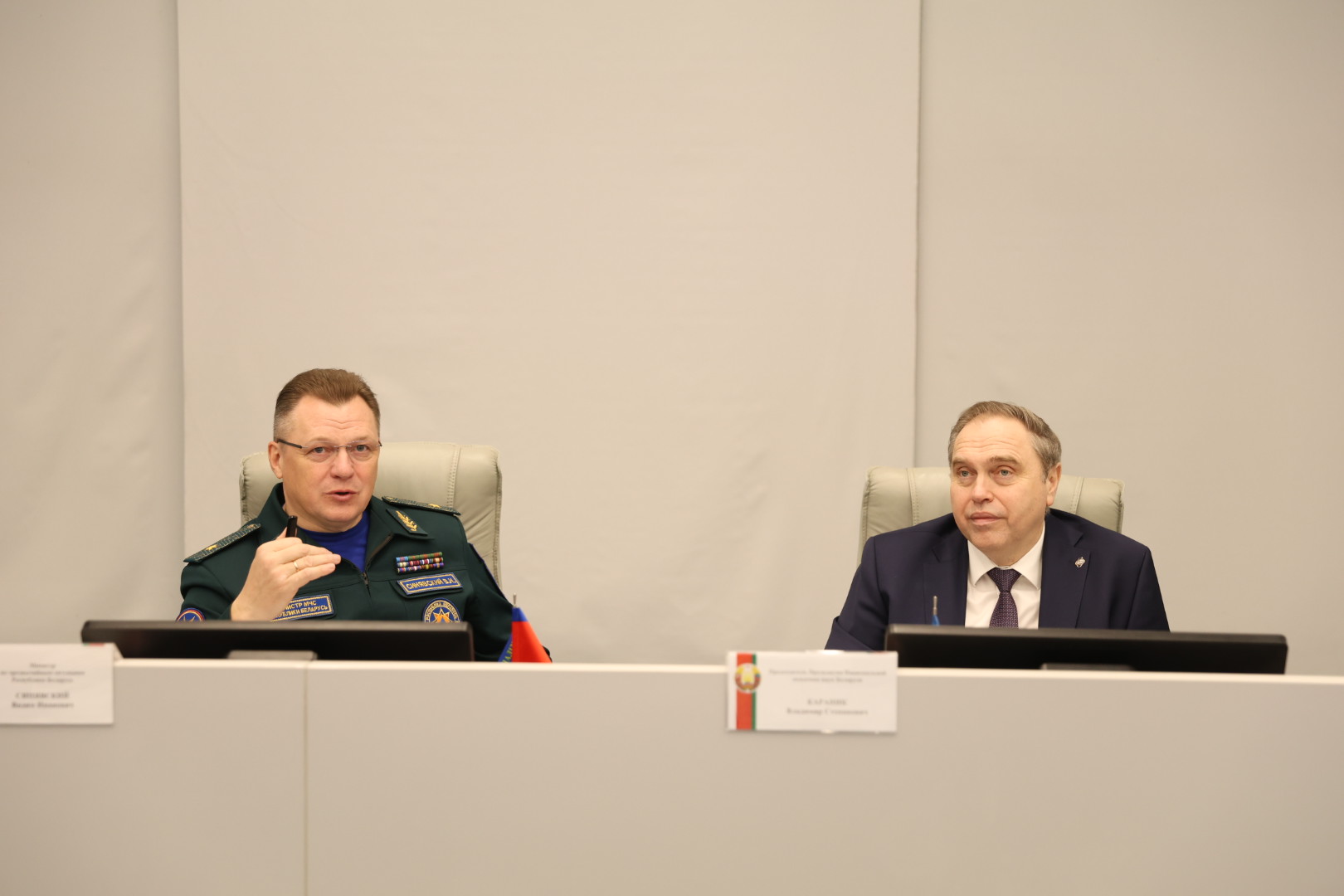
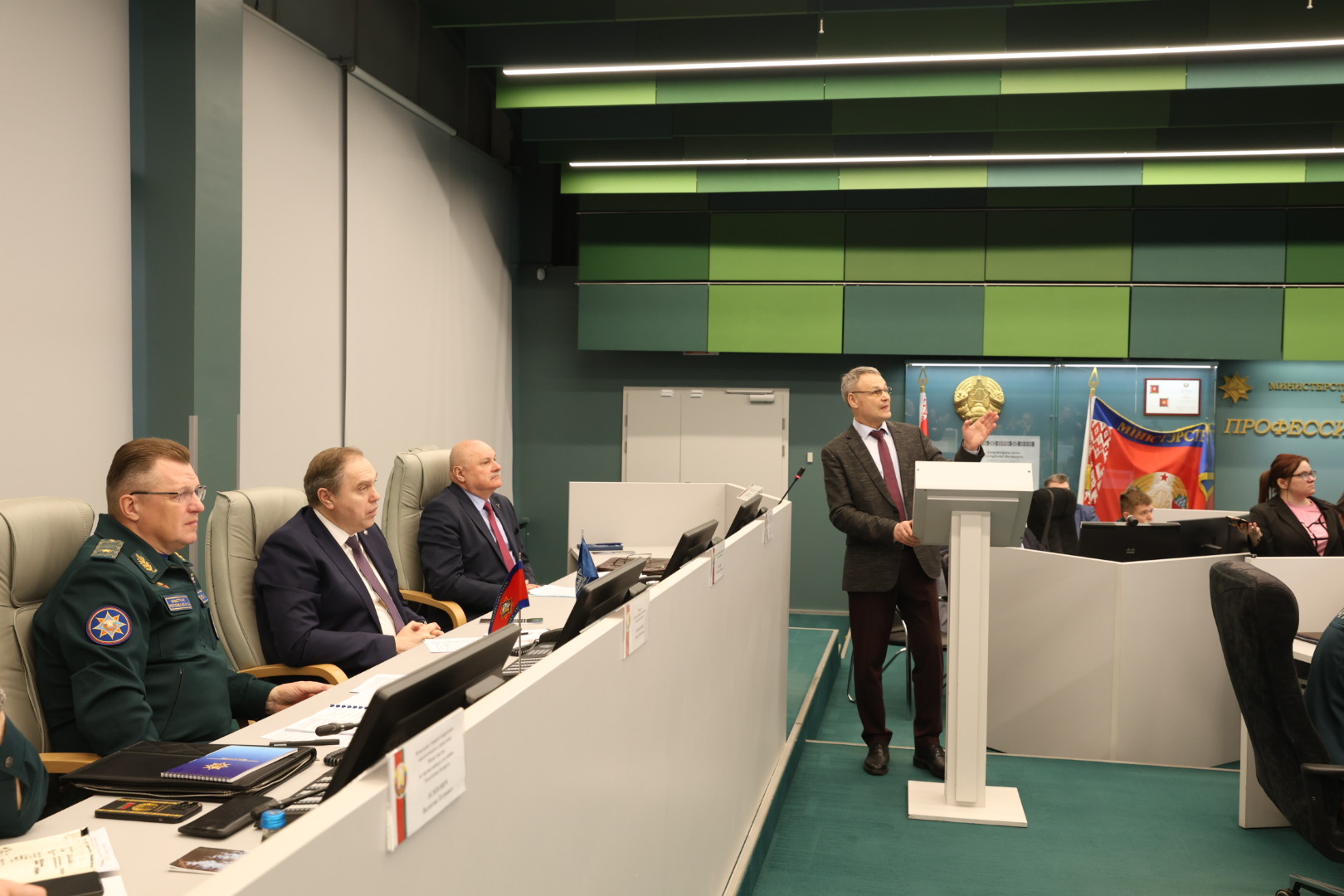
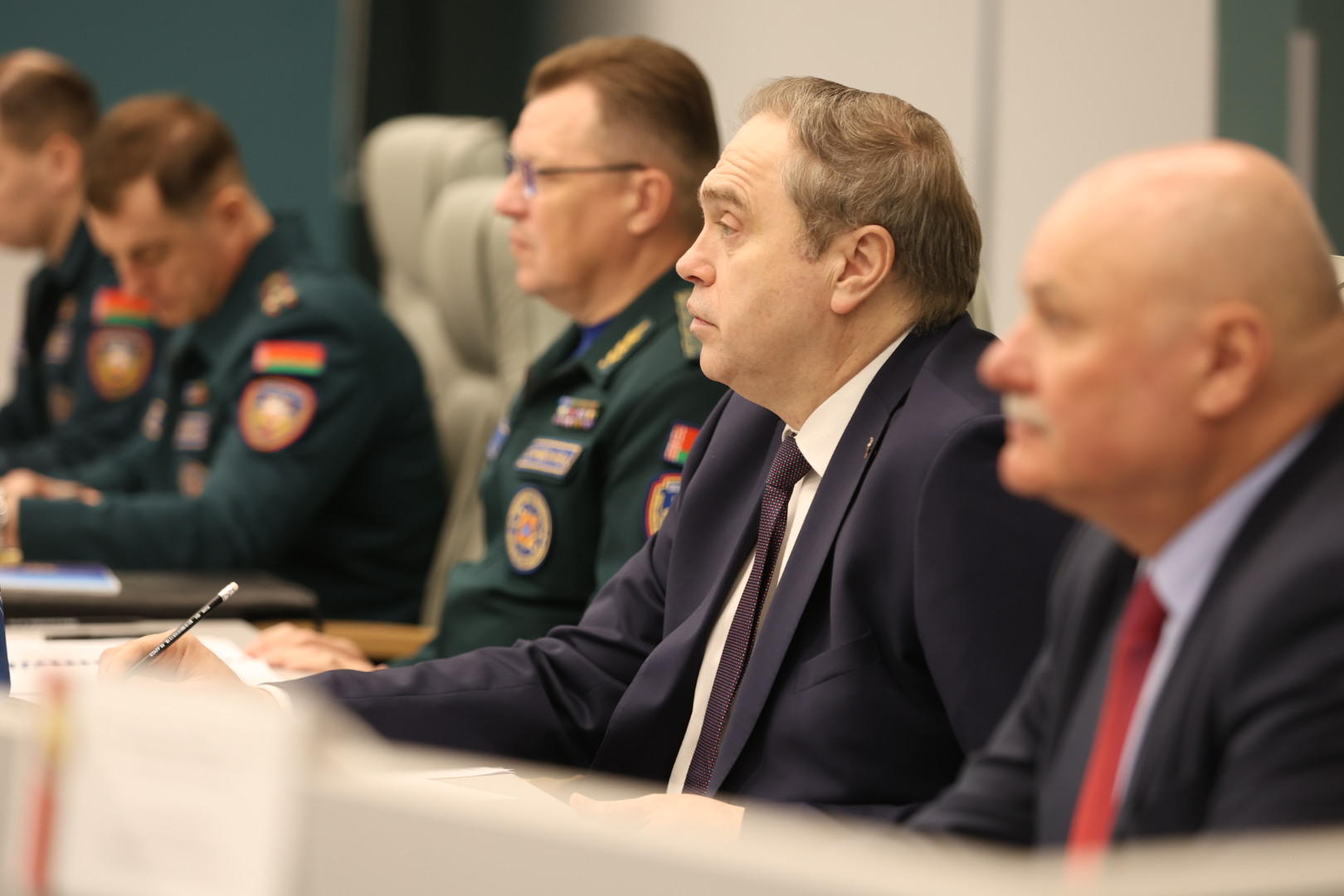
Chairman of the Presidium of the NAS of Belarus Vladimir Karanik and Head of the Ministry of Emergency Situations Vladimir Sinyavsky held a working meeting today to discuss interagency cooperation
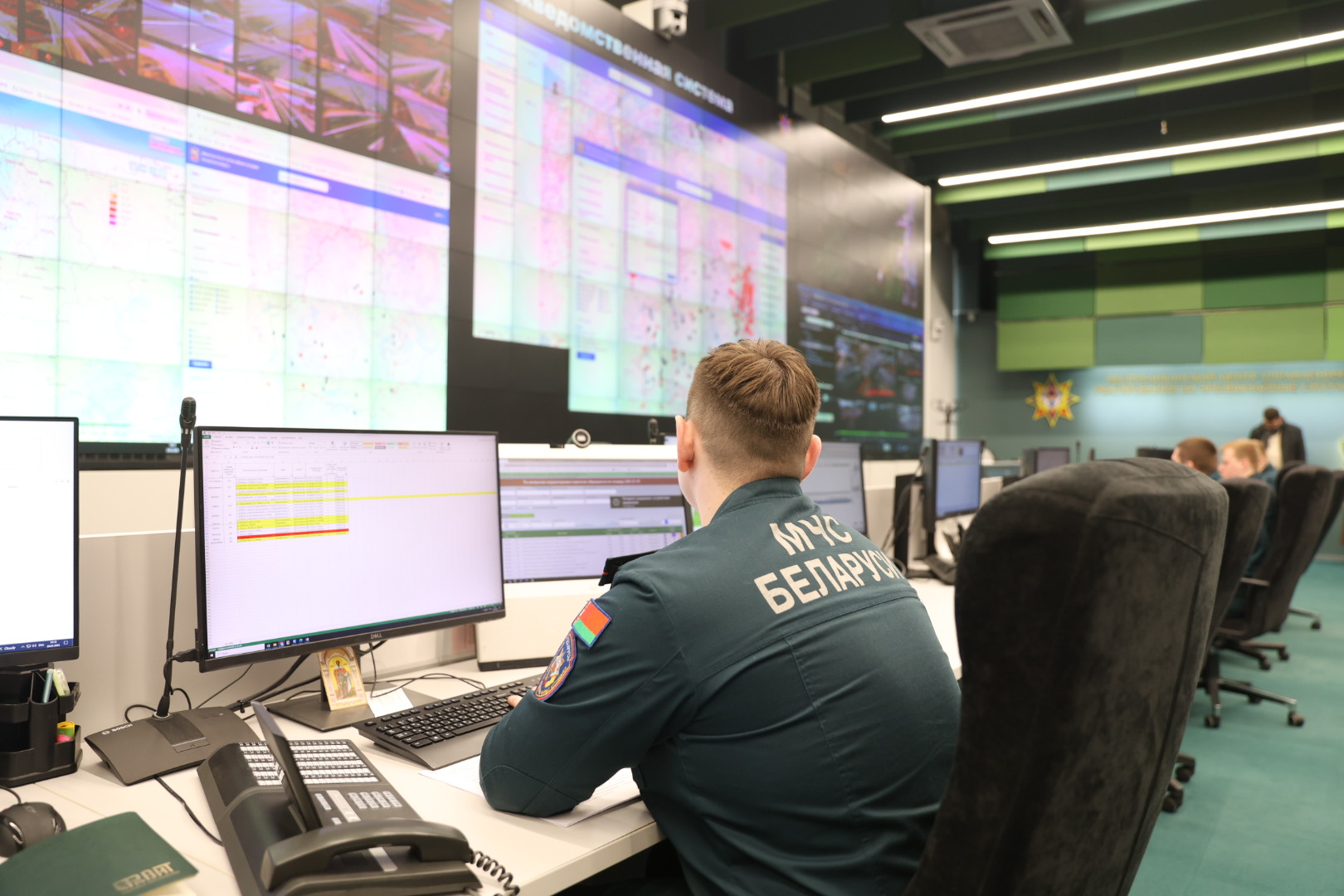
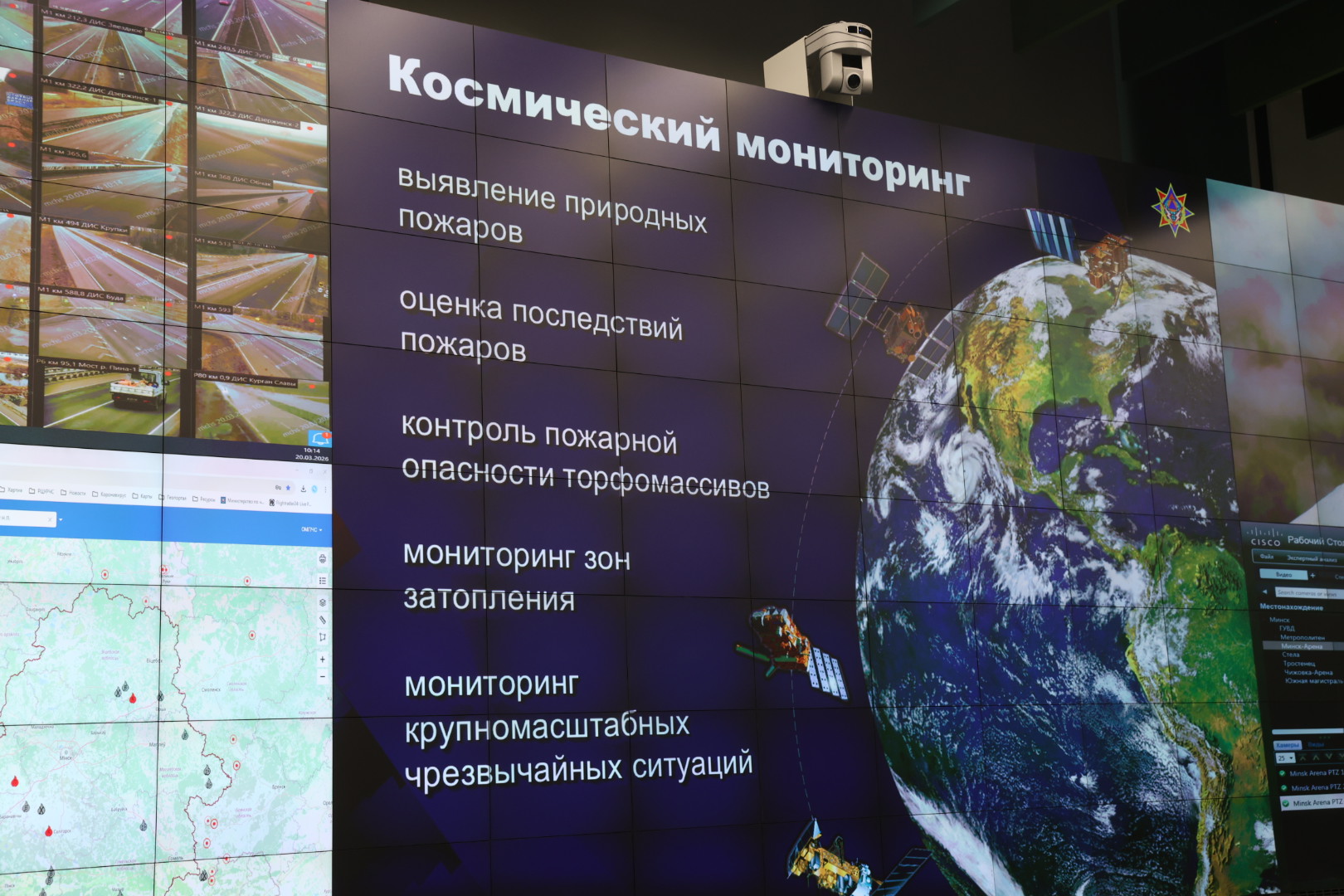
The discussion primarily concerns the use and development prospects of an interdepartmental system for monitoring and responding to fires in natural ecosystems, based on the use of space information from Belarusian Space System for Remote Sensing of the Earth.
According to Vladimir Karanik, Chairman of the Presidium of the NAS of Belarus, the interdepartmental emergency monitoring system was developed by the Academy of Sciences. Today's meeting will assess its effectiveness and discuss all aspects related to its development to improve citizen safety and reduce damage from fires and other emergencies.
"Work is currently underway to expand Earth monitoring capabilities from space. The NASBSat-2 satellite, launched in December, is completing flight tests and will soon be commissioned. It will significantly expand the capabilities of the thermal anomaly detection system," said Vladimir Karanik. – A satellite, developed as part of the Union State's scientific and technical program, is scheduled for launch next year. We are also working with our Russian colleagues on an ultra-high-resolution Earth remote sensing satellite. Our main goal is to integrate everything into a single system, taking into account the relevant agencies, so that these satellites complement each other and provide all the necessary information as quickly as possible."
The head of the Academy of Sciences noted that the new small spacecraft being developed for detecting thermal anomalies is unique. It is approximately 1.5 times smaller than NASBSat-2, and its information and data processing algorithms are performed directly in space. "This will significantly increase the speed of emergency response," Vladimir Karanik emphasized.
In turn, Emergency Situations Minister Vadim Sinyavsky reported that the Ministry of Emergency Situations has identified key areas of collaboration with academic scientists to prevent and respond to emergency situations. These include monitoring forest and peat fires, as well as natural and man-made emergencies, using a space monitoring system.